
Blog, Home Gardening Tips, Home Tree Care, Plant Health Care
Give a Christmas Tree That Keeps Growing
What if this year’s Christmas tree didn’t end up at the curb in January?
A living Christmas tree can make a memorable holiday gift, one that brings the recipient a beautiful evergreen for the holidays and, with the right planning and care, a tree they can plant in their landscape and enjoy for years. Instead of giving someone something that disappears when the decorations come down, you’re giving them a tree with a future.
There is a little more to it than picking up the first small evergreen you see, however. Species, size, timing, planting location, and care all matter if the tree is going to make the transition from holiday decoration to healthy landscape tree.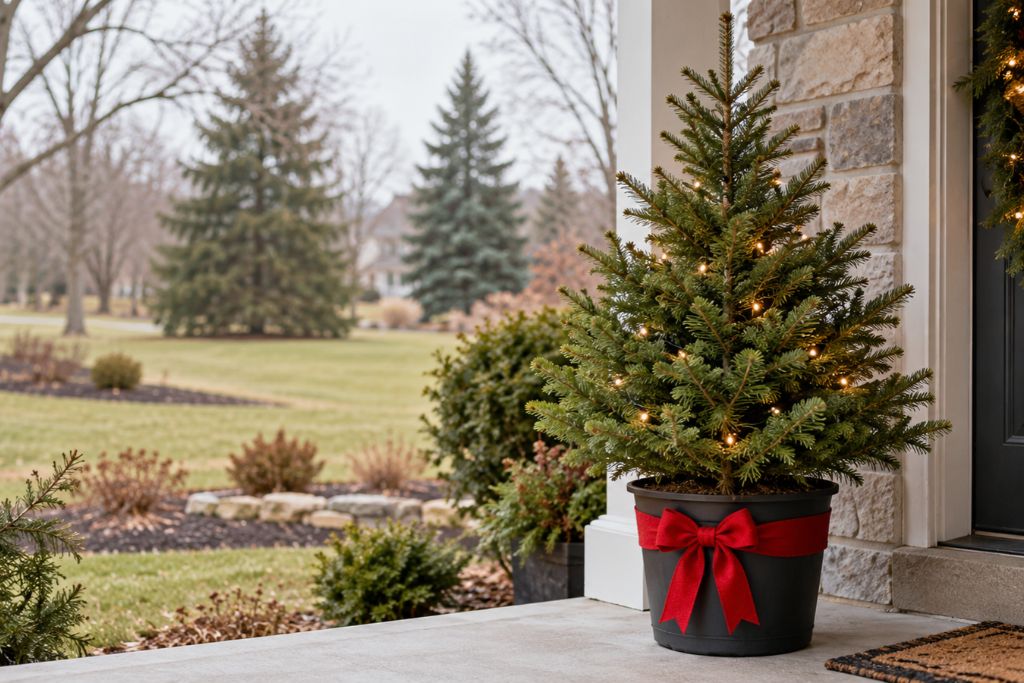
Choose the Right Evergreen
Not every evergreen is equally well suited to spending part of December indoors and then being planted outdoors in the Midwest.
Potential choices include white pine, white spruce, Norway spruce, and certain firs, depending on the specific location and growing conditions. The best species for a living Christmas tree should be selected with its eventual home in mind—not simply by how attractive it looks in the living room.
That’s an important distinction.
A tree that looks perfect beside the fireplace may eventually become a very large landscape tree. Norway spruce, for example, can eventually reach 40 to 60 feet tall and 25 to 30 feet wide.
In other words, don’t buy the future forest without knowing where you’re going to put it.
Climate, soil conditions, available sunlight, drainage, and the tree’s mature size should all be considered before making a selection.
Smaller Is Usually Better
When choosing a living Christmas tree, bigger isn’t necessarily better.
A smaller, healthy, container-grown or balled-and-burlapped tree is generally easier to handle and has a better chance of making the transition successfully. Smaller trees are also easier to move into and out of the house without damaging branches or disturbing the root system.
Think of the Christmas display as a temporary stop, not the tree’s final destination.
A tree that is small enough to move safely, maintain its root ball, and fit comfortably in the home is usually a more practical choice than a large specimen.
Plan the Planting Before Christmas
Here’s one of the most important steps, and one that can easily be overlooked when you’re thinking about presents: Choose the permanent planting location before the ground freezes.
If possible, prepare the planting hole in the fall. The soil removed from the hole can be stored somewhere protected from freezing so it’s available when the tree is ready to be planted.
Take a good look at the location before you commit.
Consider the tree’s mature height and width, along with its relationship to buildings, driveways, property lines, sidewalks, and overhead utility lines.
The tree may be only a few feet tall when it’s wrapped with a bow.
It won’t stay that way. Remember, you’re only going to plant this new addition to your landscaping once so it’s important to put it in the place with the best soil, optimal drainage, sunlight and space to grow. Not sure? Contact Hansen’s Tree Service; we’re here to help.
Keep the Tree Dormant
Once you’ve selected the tree and prepared its future home, the next challenge is keeping it healthy through the holidays.
A living Christmas tree should remain outdoors in a protected, cool location until shortly before Christmas. An unheated garage, shed, or other sheltered area can work well. The root ball should remain moist but should not be allowed to freeze solid.
Before bringing the tree indoors, inspect it for insects or other unwanted visitors.
Then keep its time inside short.
A living tree isn’t a houseplant, and it doesn’t appreciate spending several weeks in a warm home. Prolonged exposure to indoor temperatures can cause the tree to break winter dormancy and begin developing new growth that may be damaged when it returns to winter conditions.
For that reason, plan to bring the tree indoors only for a few days around the holiday.
Give It a Cool, Bright Christmas
Inside the home, keep the tree away from fireplaces, wood stoves, furnace vents, radiators, and other heat sources.
Place it somewhere with adequate light, and check the root ball regularly. It should remain moist but not waterlogged.
And remember: this is a living tree.
Treat it accordingly.
Avoid decorating it with anything that could damage the branches or foliage, and be especially careful with lights that produce significant heat.
Plant It After the Holidays
When Christmas is over, don’t immediately drag the tree from a warm living room into freezing conditions.
Move it back to a cool, protected location and allow it to acclimate before planting. If the ground is workable and the planting site has been properly prepared, the tree can then be planted. If the ground is frozen, keep the tree protected until conditions are appropriate.
Once planted, water the tree thoroughly and apply a layer of mulch around the planting area. Keep the mulch away from direct contact with the trunk.
The first year is particularly important. A newly planted tree needs adequate moisture while its root system becomes established, so plan to provide supplemental water when weather conditions require it.
A little professional guidance can make the difference between a great holiday idea and a tree that struggles after the decorations come down.
Need Help Choosing a Living Christmas Tree?
Not sure which evergreen is right for your recipient’s property? Wondering how large a tree to buy, where it should be planted, or how to give it the best possible start?
Contact Hansen’s Tree Service. Our tree-care professionals can help you evaluate the planting site, select an appropriate species, and provide guidance on planting and establishing your new tree.
Because some Christmas gifts get opened, enjoyed, and forgotten.
A healthy tree keeps giving long after the wrapping paper is gone.